
New Car Protection Checklist for Melbourne & Palm Bay Drivers
Paint inspection, washing, PPF, ceramic coating, window tint, and interior protection — a practical checklist for protecting a new vehicle in Florida.
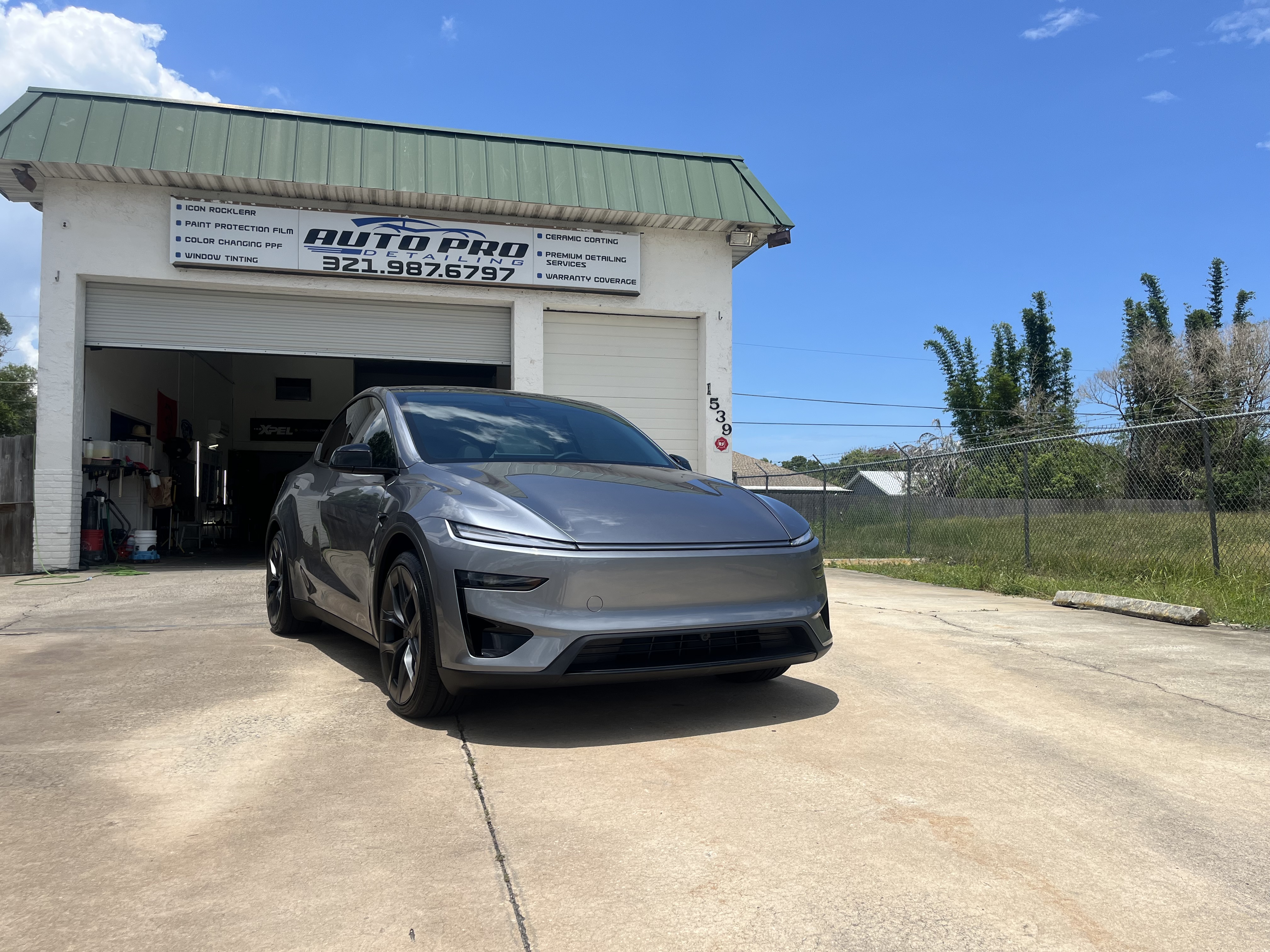
The best time to protect a car is when it's new
A new car has perfect paint — no chips, no swirl marks, no oxidation, no contamination. That's the ideal starting point for protection. Every mile you drive without protection is a mile of damage accumulating: UV breaking down the clear coat, debris chipping the front end, salt air settling on the surface.
For drivers in Melbourne and Palm Bay, a new car protection plan is the highest-return investment you can make in the vehicle's long-term appearance and value. Here's a practical checklist.
1. Inspect the paint first
Even new cars aren't always perfect. Transport, dealer prep, and lot washing can leave contamination, light scratches, or swirl marks in the clear coat. Before any protection goes on, the paint should be inspected:
- Clay or decontaminate to remove rail dust and bonded contamination that's invisible but rough to the touch.
- Assess for swirl marks or light scratches from dealer washing. If present, light correction before coating or film ensures you're not locking imperfections underneath the protection.
- Check for paint depth and condition to confirm the clear coat is healthy enough for coating or film.
This step matters because both PPF and ceramic coating lock in whatever's underneath. Protection over contaminated or swirled paint preserves the damage along with the paint.
2. Decide on PPF for the front end
The front end of a new car starts collecting chips from the first highway drive. PPF on the impact zones — front bumper, hood leading edge, front fenders, mirrors — prevents those chips before they happen.
For a new car, this is the most time-sensitive decision. Every week of driving without film is a week of chips you can't undo. The common packages:
- Front bumper only — the highest-impact zone, the most cost-effective start.
- Full front end — bumper, hood, fenders, mirrors. The sweet spot for most new daily drivers.
- Track package — extended coverage for A-pillars and roof leading edge.
The right package depends on the car and how it's driven. For a new car you're keeping, the full front end is usually the right call.
3. Add ceramic coating to the rest
Where PPF protects the front from physical damage, ceramic coating protects the rest of the car from UV, salt air, and contamination. A coating on the doors, roof, trunk, and rear gives you:
- Years of UV resistance (the biggest paint-aging factor in Florida)
- Hydrophobic performance that keeps the car cleaner and easier to wash
- Resistance to salt, bird droppings, and acidic contamination
Coating can also be applied over the PPF for a uniform, hydrophobic surface across the whole car.
4. Window tint
A new car is the right time to add tint — before the interior starts taking UV damage. Quality tint:
- Cuts the heat that makes a Florida cabin unbearable in summer
- Blocks nearly all UV, protecting leather, dash, and upholstery from fading
- Reduces glare for safer driving
Florida has specific VLT limits for each window. Ceramic film gives strong heat rejection at lighter, legal shades. Have it installed by a professional who confirms the shade is within Florida law.
5. Interior protection
The interior ages as fast as the paint in Florida. For a new car:
- Leather conditioning from the start prevents the drying and cracking that humidity and sun cause.
- Fabric and carpet protection (scotchgard-type treatment where appropriate) resists stains before they happen.
- Cabin air filter on a regular schedule keeps the air fresh and prevents the musty smell that Florida humidity causes.
6. Establish a maintenance plan
Protection isn't a one-time event — it needs maintenance to perform. For a protected new car:
- Rinse weekly to remove salt air (coastal drivers especially).
- Wash properly every couple of weeks with coating-safe products and the two-bucket method.
- Full detail twice a year — interior extraction and exterior decontamination.
- Leather conditioning every few months.
- Coating top-up as recommended by the product.
7. The full new-car protection package
For a new car you're keeping in Florida, the complete package:
- 1Paint inspection and decontamination
- 2PPF on the full front end
- 3Ceramic coating on the rest (and over the PPF)
- 4Window tint (ceramic, Florida-legal)
- 5Interior protection (leather conditioning, fabric guard)
- 6Maintenance plan
Not every car needs all of this. But each layer addresses a specific Florida threat, and together they keep a new car looking new for years instead of months.
Start with an inspection
The right first step is a paint inspection. We look at the condition of the clear coat, identify any dealer-installed damage, and recommend the protection combination that fits the car and your budget. From there, the plan is built around how you use the car and how long you plan to keep it.
A new car is the easiest car to protect — because there's nothing to fix first. Take advantage of that window.
Frequently Asked Questions
Done reading? Let's get your car looking its best.
Your vehicle deserves professional attention.
Your vehicle deserves more than a car wash.
Tell us what you drive and what you want to protect. We'll help you choose the right solution.
1539 Georgia Street NE · Palm Bay, FL 32907