
Florida Sun vs. Your Car's Paint: How to Prevent Damage
UV exposure, clear coat aging, oxidation, washing, parking, coatings, and PPF — how to protect your paint from the Florida sun.
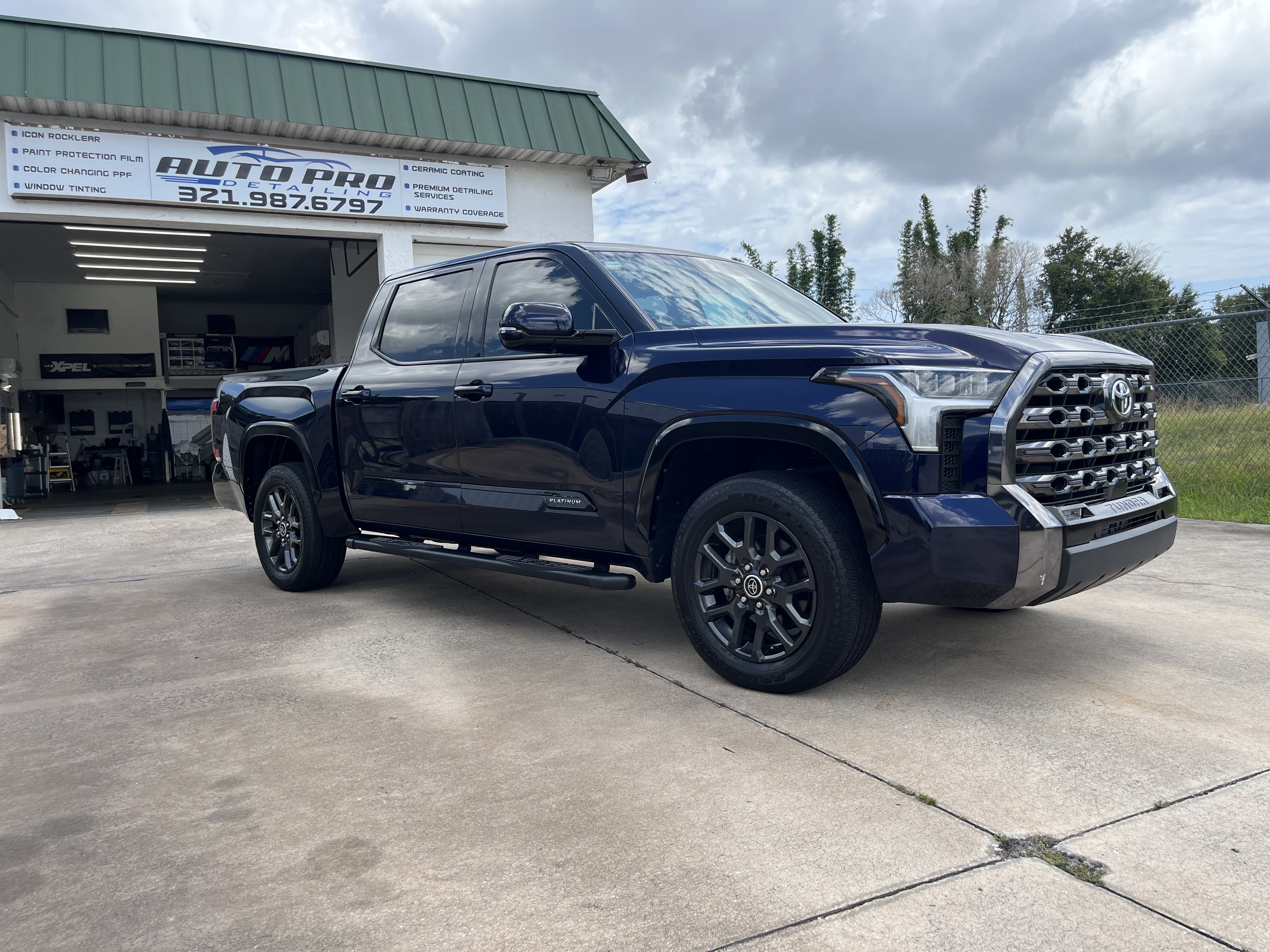
The sun is the constant enemy of Florida paint
In most of the country, winter is the season that's hardest on a car. In Florida, it's the sun — and it never takes a season off. UV exposure is the single biggest factor in paint aging here, and a car parked outside in Melbourne or Palm Bay ages faster than the same car in a temperate climate.
Understanding what the sun actually does to paint helps you choose the right protection.
What UV does to paint
Your car's clear coat is a thin layer of transparent paint that protects the color coat underneath. UV breaks down the polymers in the clear coat over time. The progression:
- 1Loss of gloss — the clear coat dulls as the surface breaks down.
- 2Oxidation — the paint becomes chalky or cloudy as the clear coat fails.
- 3Fading — the color coat loses its depth as UV penetrates the compromised clear coat.
- 4Clear coat failure — eventually the clear coat peels or flakes, exposing the color coat to direct damage.
This takes years, but in Florida sun it happens faster. A car with no protection, parked outside, shows measurable gloss loss in a single summer.
Washing practices that matter
How you wash affects how well the paint resists UV:
- Wash regularly to remove contamination. Salt air, bird droppings, and tree sap are acidic and etch into the clear coat if left. Bird droppings bake into the paint in the sun and leave permanent etching.
- Use the two-bucket method or a rinseless wash to avoid putting swirl marks into the clear coat. Swirl marks are micro-scratches that scatter light and dull the paint.
- Don't wash in direct sun. The water and soap dry too fast and leave water spots, which etch into the clear coat.
- Dry properly with a clean microfiber towel. Letting water air-dry leaves minerals that etch.
Parking habits
The single most effective UV protection costs nothing: park in the shade or under cover. A garage-kept car ages dramatically slower than one parked in the open. Even a carport or covered parking helps.
When shade isn't available, a quality car cover for a parked vehicle makes a real difference — though covers have their own trade-offs (they trap moisture and can scratch if dirty, so they're not for everyone).
Protective layers
Beyond parking and washing, the protective options:
Wax or sealant
A sacrificial layer that adds modest UV protection and gloss. Needs frequent reapplication in Florida — every few months for a sealant.
Ceramic coating
A bonded layer that resists UV far more effectively than wax, lasts years, and keeps the paint easier to clean. The coating takes the UV abuse instead of the clear coat. This is the most effective surface-level UV protection.
Paint protection film
PPF includes UV inhibitors that block UV from reaching the paint underneath. On covered panels, PPF prevents both chips and UV fading. It's the most complete protection for the high-impact zones.
The combination that works
For maximum protection on a car you're keeping: PPF on the front end (chips + UV) and ceramic coating on the rest (UV + hydrophobic + easier cleaning). The film handles the physical and UV abuse on the most exposed panels; the coating handles the UV and contamination on the rest.
Not everyone needs that level of protection. But if you're parking outside in Florida sun and keeping the car for years, some protective layer is better than none — and the right layer depends on your budget and how long you plan to keep the car.
Paint correction
If the paint is already showing UV damage — dullness, light oxidation, swirl marks — paint correction can restore the gloss by removing a microscopic layer of the damaged clear coat. Correction followed by a coating is the standard path for bringing sun-damaged paint back and protecting it going forward.
Correction has limits: if the clear coat is too thin or already failing, correction can't fix it. That's why an inspection matters before committing to correction.
The bottom line
Florida sun is relentless, but paint damage from UV is largely preventable. Park under cover when you can, wash properly and regularly, and put a protective layer — wax, coating, or film — between the sun and your clear coat. The cars that look good after years in Florida are the ones that were protected, not the ones that were lucky.
Frequently Asked Questions
Done reading? Let's get your car looking its best.
Your vehicle deserves professional attention.
Your vehicle deserves more than a car wash.
Tell us what you drive and what you want to protect. We'll help you choose the right solution.
1539 Georgia Street NE · Palm Bay, FL 32907